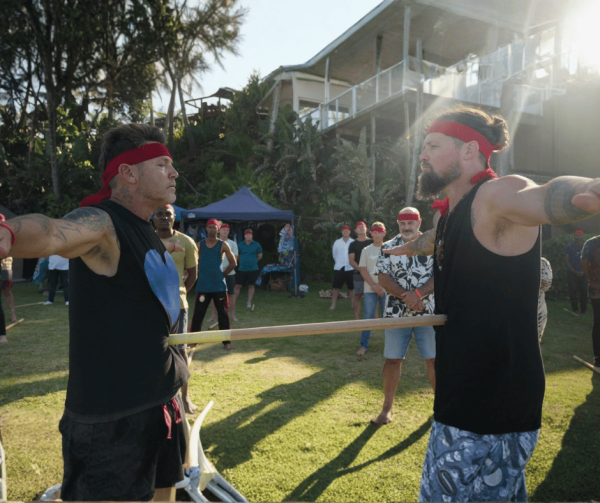
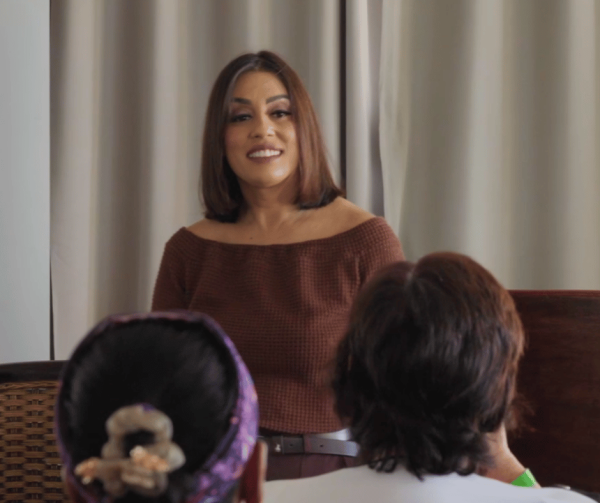
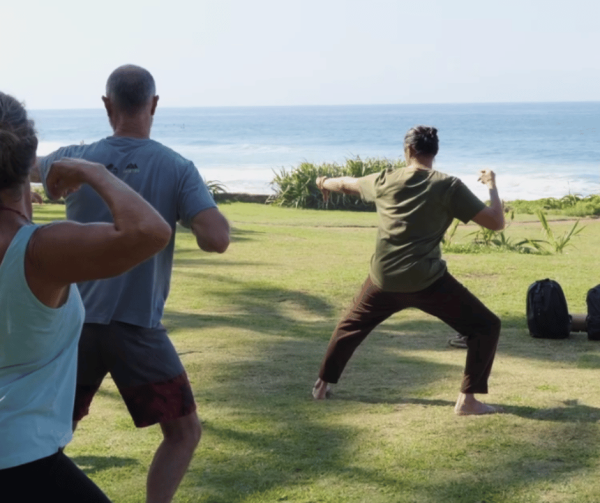
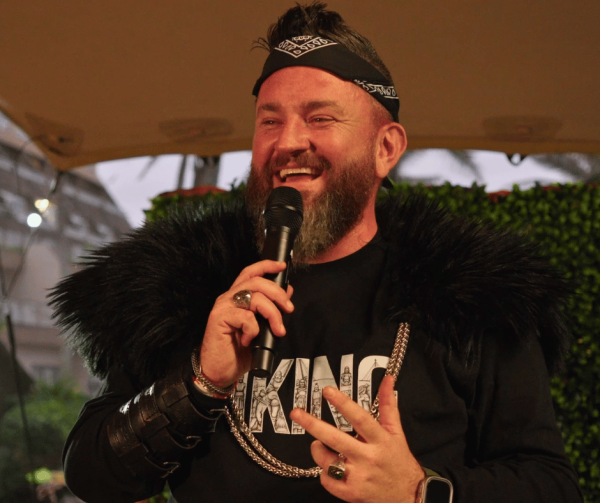
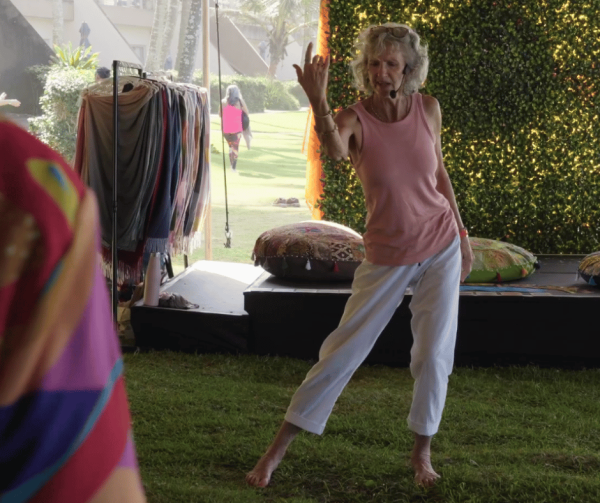
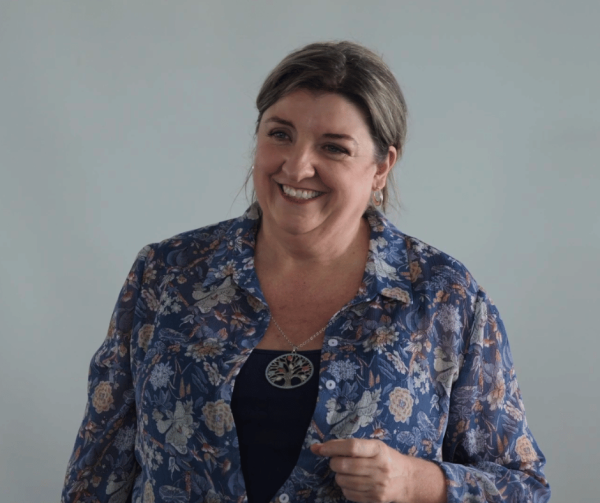
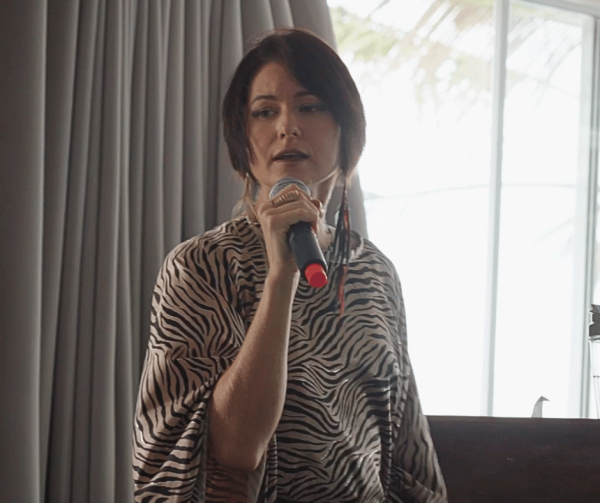
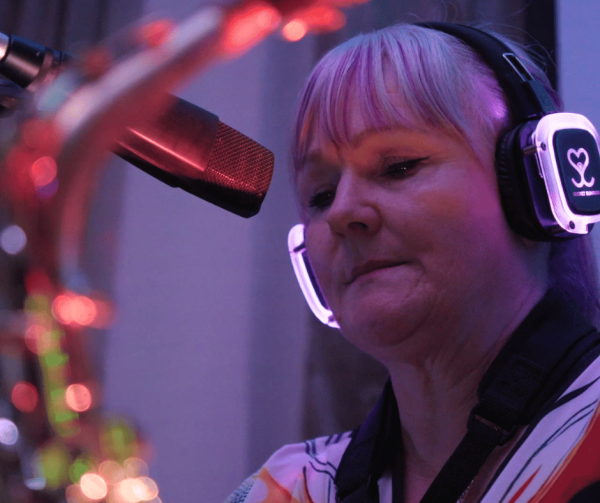
The 4th annual KwazuluSpirit Festival wrapped up on a high note after welcoming hundreds of attendees to Salt Rock Beach Resort on 30 and 31 May 2026 for a transformative weekend of consciousness, healing, connection, and personal growth. Already building on the success, event organisers have announced 29 and 30 May 2027 for the next KwazuluSpirit Festival.
The two-day festival, which is fast becoming one of the country’s most inspiring wellness gatherings, brought together respected wellness practitioners, thought leaders, healers, and transformational facilitators following the festival philosophy: ‘Our footprint is kindness; our credo, consciousness’.
Debra Stevens Robins, event curator, described the 2026 edition as the most successful yet: “The feedback from attendees and participants has been absolutely phenomenal,” she said. “We had solid ticket sales and welcomed many new faces to the festival community.” One of the defining features of the festival remains its commitment to accessibility. Every event, workshop, masterclass, movement session, and healing experience is included in the ticket price, allowing attendees to fully immerse themselves in the programme. “Attendees could go for healing as many times as they wanted, with every single practitioner providing their services pro bono. They don’t charge. They come with love, offering, healing, connectedness and growth,” said Debra.
A Full Programme of Festival Highlights She noted that the KwazuluSpirit Festival has truly become a wellness extravaganza: “The Energencia Bliss Booths Energy Healing Marathon was well attended, with so much healing done and so much healing received.” The festival’s transformational masterclasses also proved exceptionally popular, with every session at capacity, and standing room only for presentations by renowned speakers, including Anne-Marie Clulow, Colleen-Joy Page, Jenna Dias, Sharon Castle, Taz Singh, Chanel Lingenfelder, and many more.
Internationally recognised medium and life coach Taz Singh commented: “It was truly an honour and a privilege to be part of such a beautifully organised and inspiring event. The energy, warmth, and sense of community throughout the festival were exceptional, creating a space for meaningful connection. I thoroughly enjoyed sharing with everyone and connecting with so many wonderful souls.”
Among the weekend’s most talked-about experiences was the Fire Walking ceremony led by Cobus ‘The Viking’ Visser. “It was something to behold,” said Debra. “Everybody was trying it. Some people walked through the fire three times; they were so taken with it. The inspiration of this man to tell his story and inspire others to achieve is something quite wonderful.”
Another standout event was Untamed Men, facilitated by former Springbok Joe van Niekerk and Brett Shuttleworth, which attracted strong attendance and generated enthusiastic feedback from participants seeking deeper personal insight and growth.
Debra says the Rise of the Divine Feminine with Rouxvé also resonated deeply with attendees: “It had everybody either in tears of joy or looking forward to enhancing their femininity and embracing the goddess within.” Movement and embodiment sessions formed another cornerstone of the festival experience. Participants embraced Tai Chi with master martial artist Leo Low Ming, yoga, meditation, kirtan, sacred dance, and breath-led practices designed to foster balance and connection.
Beyond the festival venue, the Mindful Artisan Market hosted at the Salt Rock Country Club field enjoyed support from festivalgoers and the public. The market featured local artisans, live music, and the popular Traditional Healing Village hosted by practitioner Godfrey Madlalate. “The success of this market is that the people buying are conscious and holistic, as are the vendors,” explained Debra. “It’s not a massive market – everything on sale resonates with your lifestyle, and every person is somehow connected.”
Planning for Next Year’s Festival Building on this year’s success, organisers have already confirmed the dates for next year’s gathering. The festival will return to Salt Rock on 29 and 30 May 2027 with plans to increase offerings. Early bird tickets go on sale on Quicket on 17 November 2026. Festival organisers encourage attendees and newcomers alike to diarise the dates and join the growing community for another unforgettable celebration of consciousness in 2027. For more information, visit www.kwazuluspirit.com.
More than anything, KwazuluSpirit has always been about people: People coming together with open hearts. People reconnecting with the essence of who they are. People sharing a space in time, in touch and in Divine love.
What lies beyond the edge of ordinary perception? For most people, that question is one that they are looking to answer. For our panellists, it is the very world they inhabit.
The Other Side is a panel conversation for those who know there is more to reality than meets the eye. Moments of knowing or magic. A vision that came true. A moment where the veil between this world and the next parted.
Host Sarah Bullen is the author of The Other Side and a collector of Journeys of Mysticism and Magic. She brings together three remarkable practitioners who have each spent a large part of their lives navigating the unseen.
Meet the Panel
Christa Gumede Buthelezi — Intuitive & Sangoma
American-born and African by choice, Christa walks the path of ancestral wisdom and spiritual healing. Her work bridges worlds — honouring the voices of those who have passed and sharing their guidance for the living.
Cobus Visser — Firewalker Cobus has walked across fire over 1000 times and has guided hundreds of people across the threshold of fear. His work is a living demonstration that the impossible is closer than we think.
Heike Sym is a much loved psychic medium,
Heike has spent years bridging the living and the dead, bringing through messages that heal, comfort and often surprise.
The Conversation
Together, this panel will explore what it truly means to live with one foot in the seen world and one in the unseen — how these gifts first made themselves known, what it costs to honour them, and what wisdom the other side is offering us in this moment.
If you have felt the presence of something greater, witnessed the impossible, or sensed that your own gifts are waiting to be understood — this conversation is for you.
Each Year we close the KwazuluSpirit Festival with a ‘Loving Kindness Meditation’ gifted by a member of The Buddhist Retreat Centre in Ixopo – This year Brendon Small offers this beautiful gifting. The BRC is perched on a ridge at the head of a valley in the Umkomaas river system in KwaZulu-Natal. The Buddhist retreat Centre looks out on a vista of indigenous valleys, forests and rolling hills receding like waves in the blue distance. Here, for more than forty years, people of all religions have come to experience peace and tranquillity. It is a gentle, sympathetic space where one can be still and get in touch with oneself and reflect on the things that crowd one’s life. CNN featured the BRC as one of the 10 finest Meditation facilities in the world.
Below is an overview of what to expect Breathing in, just bring a gentle awareness to the breath. Breathing out, be aware of the breath leaving the body.
(Pause)
You may notice the mind wandering. This offers us an opportunity to cultivate mindfulness and concentration. Each time we notice the mind wandering, we’re strengthening our ability to recognize our present experience. Each time we bring the mind back to the breath, we strengthen our ability to concentrate. Treat it as an opportunity rather than a problem.
(Pause)
Now begin offering mettā (lovingkindness) to yourself. We start with ourselves because, without loving ourselves, it is almost impossible to love others.
Breathe gently, and repeat silently to yourself the following phrases, or any other phrases of your choosing that communicate a kind and friendly intention:
“May I be filled with lovingkindness.” “May I be safe from inner and outer dangers.” “May I be well in body, heart, and mind.” “May I be at ease and happy.”
Repeat these phrases several times, perhaps picturing yourself receiving them. If that is difficult, it can sometimes be helpful to picture ourselves as a child receiving this love. Feelings contrary to lovingkindness, like irritation, anger, or doubt, may come up for you. If this happens, be patient with yourself, allowing whatever arises to be received in a spirit of kindness, and then simply return to the phrases.
(two to three minutes of silence)
Now bring to mind someone who has benefited you or been especially kind. This may be a loved one, a friend, a teacher or mentor. As this person comes to mind, tune into your natural desire to see this person happy, free from suffering, and at ease with life. Begin to offer this person the same phrases of lovingkindness and care:
“May you be filled with lovingkindness.” “May you be safe from inner and outer dangers.” “May you be well in body, heart, and mind.” “May you be at ease and happy.”
(two to three minutes of silence)
Let this person go and bring to mind a neutral person. This is someone you see, maybe regularly, but don’t know very well. It may be somebody who works somewhere you go a lot, a coworker, a person you’ve seen at meetings, or maybe a neighbour.
Although you don’t know this person well, you can recognize that just as you wish to be happy, this person wants to be happy as well. You don’t need to know what their happiness looks like. Again, offer this person the phrases of lovingkindness:
“May you be filled with lovingkindness.” “May you be safe from inner and outer dangers.” “May you be well in body, heart, and mind.” (two to three minutes of silence)
Now, letting this neutral person go, think of somebody whom you find difficult, or toward whom you feel resentment, hurt, or jealousy. You may not want to pick the most difficult person in your life; instead, choose someone who is currently agitating or annoying you.
Again, offer the phrases of lovingkindness, being aware that just as you wish to be happy and free from harm, so do even the most difficult or troublesome people:
“May you be filled with lovingkindness.” “May you be safe from inner and outer dangers.” “May you be well in body, heart, and mind.” “May you be at ease and happy.”
(two to three minutes of silence)
Letting this difficult person go, try to expand your well wishes as wide as you can imagine–to your family, your friends, your community, your city, your state, your country, to all beings on earth. Notice the immense depth of your own heart as you offer these phrases:
“May all beings be filled with lovingkindness.” “May all beings be safe from inner and outer dangers.” “May all beings be well in body, heart, and mind.” “May all beings be at ease and happy.”
(two to three minutes of silence)
Now, letting go of all thoughts of others, return your focus to your own body, mind, and heart. Notice any discomfort, tension, or difficulty you are experiencing. Notice if you are experiencing any new lightness, warmth, relaxation, or joy. Then, whenever you are ready, allow your eyes to open and gently return your attention to the space around you.
To all of our KwazuluSpirit Participants and Guests, a message from Chrisi Van Loon of the BRC
Dear Friends and Supporters,
The BRC has faced uncertain times before, and with the support of our family and friends, we have always emerged with renewed confidence to continue providing a space for self-reflection and spiritual growth. Today, we are facing another period of significant challenge and we need your help.
Recently, severe thunder and lightning storms caused severe infrastructure damage, necessitating expensive tree removals, and requiring the purchase of two generators to manage the ensuing frequent power outages due to lightning strikes. One of our borehole pump motors was also damaged by lighting requiring a replacement.
These unexpected costs, combined with low retreat attendance over the last month, have placed the BRC under serious financial constraint.
As a non-profit organization, we rely solely on accommodation income to cover our monthly operating expenses. Currently, we are not reaching the break-even point necessary to sustain our operations.
We are appealing to you, our dedicated supporters, to help us keep our doors open. Your contribution will ensure the Centre remains a sanctuary for all who seek it.
Gents, are you ready for an immersive and transformative experience?
With two well-known thought leaders and coaches Brett Shuttleworth and Joe van Niekerk
Brett For over 20 years, Brett Shuttleworth has been teaching transformational principles, whether in the boardroom to corporates or to individuals on his internationally renowned Smiling Soul Retreats. Across all his platforms, his voice has echoed the same message: Your reality begins with the story you tell yourself .And now, more than ever, his message is meeting its moment. In a world flooded with information but starved of wisdom, Brett offers something rare: Clarity. A human reminder that we are not as stuck, lost, or broken as we think. We’re just one shift in perspective away from everything we’ve been seeking. What sets Brett apart is not just what he teaches, but how he lives it. Joe You may remember Joe van Niekerk, also known as Big Joe, from his rugby career in the 2000s with the Lions, Stormers, Springboks, and Toulon in France. Or perhaps as Jungle Joe, shaped by his transformative years living and working in Costa Rica. Since retiring from professional rugby in 2014, Joe has undergone a profound personal journey. Today, he works as a trauma-healing coach, supporting both men and women, and brings a focused two-hour men’s breakthrough experience to this Untamed Men session.
This men’s experience offers a grounded and supportive space within the wider spirit festival container. A space for men to slow down, reconnect with themselves, and gently explore what is present beneath the surface. The work is experiential, embodied, and rooted in presence rather than performance. If you’re feeling stuck, anxious, burnt out, or emotionally disconnected, and you sense there is something deeper calling for your attention, this session offers space for clarity, grounding, and meaningful insight.
This experience includes the integration of Hojo training. The strength of the Hojo training lies in its ability to facilitate the organic seeing of each participant’s core strength, authentic power to create and limitless capacity to manifest.
If this breakthrough experience embraces anything, it is that transformation begins when the heart softens, the story loosens and a new truth slips in. A truth that says: You are not what’s happened to you. You are how you choose to see it. And in that simple shift, everything changes. Join Brett and Joe at KwazuluSpirit Festival 2026: Sunday 31 May at 13:00 2-hour men’s breakthrough immersion in the beach shala, with the magnificent Indian Ocean adding its magic.
Meet Godfrey Madlalate who shares his journey and his experience of how the role of Traditional Health Practitioner has become a sought after natural health option for all South Africans.
“I was privileged in that, as I started my journey as a healer in 2000, there was a conscious effort by South African healers to get formal recognition by the South African government, through direct interaction with the national Department of Health.” Says Godfrey
African traditional health practitioners worked tirelessly with the national Department of Health between 2003 and 2010 to officially recognise and formalise our healing work. The pinnacle of this process was that former President Thabo Mbeki assented to the Traditional Health Practitioners Act No.22 of 2007 in a landmark parliamentary ruling. The act allows government to regulate the work of all traditional health practitioners in South Africa and to deal with misconduct by healers. A special Directorate of Traditional Medicine was established within the Department of Health and the at least 10 per cent of the national health budget was reallocated to this directorate. An Interim Council for Traditional Medicine is also in place since circa 2008. We argued that we, as healers, could not be regulated by the Health Professions Council of South Africa (HPCSA) due to the complex nature of our work and inadequate documentation of our work, let alone our modes of training and practice approaches. It is my hope that the interim council will soon transform into a permanent council.
The Traditional Health Practitioners Act No.22 of 2007 classifies traditional healing work into four categories viz.
Herbalists;
Diviners;
Traditional Birth Attendants (midwives);
Traditional Surgeons (circumcision ritual specialists).
This classification does not recognise the entire spectrum of healing in South Africa but provides a comprehensive perspective of the situation on the ground. The recognition of traditional healers in South Africa has not been an easy journey and remains incomplete at this stage. We do hope that the finalisation of the Council on Traditional Medicine will provide for the standardisation of training approaches, medical aid claims and professional recognition for healers. It remains a bridge too far.
Outside of the scope of government, healers have made inroads into the establishment of formal tertiary qualifications for traditional healers. A case in point is the Mhlabuhlangene School of African Medicine in Ladysmith, KwaZulu-Natal. They offer diplomas, bachelors, honours, masters and PhD programmes in African traditional medicine as well as theology and are fully accredited by the relevant higher education authorities up to National Qualifications Framework Level 10. Amongst the highest qualifications they offer is a PhD in healing science. The entire mindset that healers are barbaric, unhygienic, dirty, uneducated, misguided and dangerous to society has to change rapidly. We have worked tirelessly to change the face of healing in this county. What is actually amazing is that the calling to become a traditional healer (herbalist, diviner or prophet) has nothing to do with one’s educational background. We have academics, politicians, bureaucrats, sports personalities and ordinary working-class citizens who have been called to heal by their ancestors. I should also caution those who think that healers worship their ancestors. On the contrary, we venerate our ancestors and worship God. This is part of our unfortunate history in that, when the Christian missionaries and explorers first landed in Africa, they changed our ways of living and belief systems. Traditional and Indigenous belief systems were demonised as being barbaric and ungodly. It is my ongoing wish that young South Africans will in future register for higher education studies in healing as well as indigenous knowledge systems.
I have not been privy to recent studies and surveys, but we estimate that we have in the region of 750 000 traditional health practitioners in South Africa currently. In the early 2000s, this number averaged circa 550 000. Traditional health mentors (‘abo Gobela’ in familiar speak) remain very key in achieving successful traditional healing outcomes, as they play a significant role in the training and mentoring of healing initiates.
The policy on African traditional medicine is central to the implementation and praxis of our traditional belief systems. We use mostly herbs, shrubs, trees (90 per cent) as well as salts and chemicals (five per cent) coupled with animal skins, bones, and oils (five per cent) to make healing herbal preparations that keep our people in good spiritual, mental and physical health. One of my greatest wishes would be to see a primary health care system for South Africa that encompasses integrated approaches and collaborations between clinical medicine and African traditional medicine.
My perspective on the role of traditional health practitioners in South Africa The African traditional healer of the precolonial era was a leader in society. These healers were very pivotal in regional and national decision making, seated next to our kings and queens. They were responsible for a lot of societal deliverables that included, among others, the following:
Rain making for the local regions;
Assisting the kings, queens and other traditional leaders with advisory and decision making in the context of ensuring the wellbeing and protection of the nation;
Precolonial primary and tertiary health care systems, including surgery and midwifery;
Strategy and scenario planning for the nation through prophecies, divination and predictions;
Domestic animal welfare and care;
Overseeing cultural rituals and ceremonies;
Counselling the general population;
The regular sourcing of herbs and shrubs for processing and the ultimate treatment of humanity.
Beyond precolonial Africa a lot has changed due to the advent of ‘modern civilisation’, colonisation, repression, political systems and the resettlement of our people, education and technology. The modern-day traditional healer works in a highly restrictive and regulated environment that stifles the creativity and versatility of our approaches and methods. It remains our task to ensure that traditional healers operate in optimal environments despite facing numerous challenges. When we introspect our roles in present-day South Africa, we realise that our central role remains to foster social cohesion and nation building, this to be followed by the building and rebuilding of nuclear families. We are, alongside traditional leaders, custodians of our culture and heritage. Our core daily duty remains to divine and treat our patients. We also have a mammoth task of balancing the earth’s energy points through several spiritually inspired rituals and ceremonies that include rain making. We are an integral part of the practitioners that have to ensure that we live in harmony with nature and its ecosystems. The complexity of colonisation compels us to educate the youth on African indigenous knowledge systems. We have to strive to empower the African children and adults to thrive in the diverse and interfaith community that we have become.
The ancestral calling is unique and not limited to black Africans only. South Africa boasts a few white, coloured and Indian traditional healers who were trained and mentored amongst familiar lines. We have to preserve the beauty and integrity of our diverse community. I personally had to sacrifice an entire professional career in the built environment in order to take up work as a traditional health practitioner on a full-time basis. This is my 22nd year in the field and I have gathered a lot of wisdom in the process. My appeal to the younger and recently initiated traditional healers is that their conduct should remain dignified and full of integrity at all times.
Godfrey Madlalate, Dip (Herbalism) has been working as a traditional health practitioner since 2001 and is based in Soweto, Johannesburg. In 2000 he spent a year receiving training as a healer. He specialises in bones divination, physical treatment and energy balancing of individuals using African traditional medicine modalities. His other passion remains patient counselling and life path alignment.
He is the owner and MD of Madlalate Management & Development Consulting. He’s a part- time management consultant and previously worked in the private sector in a management capacity since 1993. He is highly experienced in the fields of project management, urbanisation development, enterprise development, corporate strategy and scenario planning.